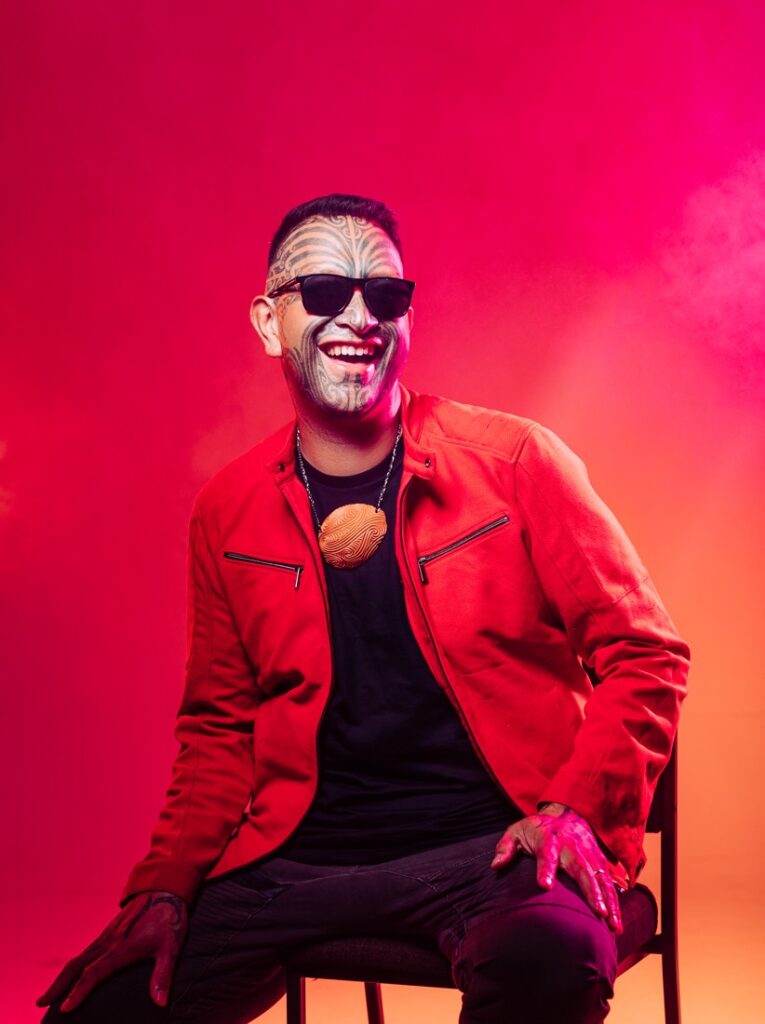
In early March, the capital’s Michael Fowler Centre will take on a completely new identity when Rob Ruha joins forces with the New Zealand Symphony Orchestra (NZSO) to present TEIWA as part of the Aotearoa New Zealand Festival of the Arts (its 40th Anniversary). The event will be one of the major highlights of the festival, melding orchestral scale, haka, and the diverse sound world of Aotearoa into a single, immersive live performance.
Teiwa is shaped by Ruha’s connection to East Coast Māori histories, especially the stories of ancestral performance houses known for their awe‑inspiring displays of creativity. The project re-imagines these ancient environments through a modern lens, using haka, orchestral music, and contemporary composition to bring those long‑held narratives into the present.
This is a significant collaboration, bringing together a full symphonic capacity, while TOA (Te Taumata O Apanui) adds the physical and emotional force of kapa haka. The evening blends waiata rooted in marae tradition with large‑scale anthemic material and new work created specifically for the event.
Audiences will hear some of Ruha’s most recognised music alongside brand‑new material that expands his artistic language into orchestral territory. Tim Gruar called up Rob Ruha to find out more.
When I catch up with Rob, he’s just slipped away from his son’s Basketball Tournament to have a bit of a kōrero about his latest project. Given the crazy summer we’ve had, the conversation inevitably begins with the weather. He kino te rangi ki konei ki Te Whanganui-a-Tara. He aha te ahua o te rangi kei hea koe?
Yeah, it’s raining. We’re in a red alert for heavy rainfall, but it’s just normal drizzly rain. It’s supposed to hit later tonight.
You’re in Rotorua, but have strong ties to the East Coast. And you’re really isolated up there. A couple of years ago, I was working in Te Kaha, I had to ride a horse to get out because the road had closed, due to slips after a big storm. That was ‘fun’.
Well, we’re hoping it doesn’t do that again..
I saw the devastation afterwards driving through. Pretty scary getting back to Whakatāne. I hope everyone is OK up there. Stay safe.
Sadly, only a day later we heard about the major flooding in Te Araroa and a devastating slip, causing fatalities in Mt Maunganui. Our hearts and prayers go out to everyone one affected.
Anyway, enough about the weather, this is about your beautiful waiata and mahi. Your work is so wide: Kapa Haka composition, soul, reggae, R&B, orchestral projects – looking over your career, are there any threads that tie it all together?
I think who I am is the greatest thread. Music is creativity, so it can take many forms. Who I am, where I’m from, what I was raised to believe in – our culture, identity, my identity as a boy on the East Coast – is the main thread. My belief in identity and its power to give inter-generational life‑giving energy to people and families is the main thread of what I like to do as a creative.
Yeah, your music has a positive multi order to it. The song 35, in particular – like that’s a banger and everyone’s like: “Oh, we gotta go there to that place!” It’s made the East Coast a real destination again – mana, natural beauty, people, everything!
Yeah, it’s created that kind of thing. There’s merch everywhere – bumper stickers, hoodies, cups, even the ice cream ‘scoop’ named after Kalega.
For context Rob’s song Kalega refers to the massive ice cream scoop servings offered by shops like the Tirohanga Beach Store, near Ōpotiki on State Highway 35. As the lyrics go: “Ōhope, Ōhiwa/ Scoop, fish, oysters, ice cream – Tirohanga / Whakatōhea, Tūwhakairiora!”
That big scoop, the Kalega ice cream scoop is still a thing on the East Coast. A new shop has opened and still sells it.
I love the way a song becomes part of the identity of a rohe. And it’s not just commercialism, it’s the ownership, the kaitiaki of the whole concept.
Actually, we still get messages from organisations doing the Kalega pilgrimage as a team-building exercise. They start in Rotorua and follow the song along the Coast.
Really? That’s so cool. It’s really got under the skin, under the soul of that rohe.
It has.
What would you call your music? Your waiata?
I coined ‘Haka Soul’ when I started my solo career. I come from a haka background. My family for generations has done haka. We grew up doing haka as breakfast, lunch and tea – like waking up with the sun. We’re still doing haka now.
The haka part – that primal energy tapped into the past, relevant now, future‑focused – is central to everything in Kapa Haka and still part of my artistry.
And your iwi, Te Whānau-ā-Apanui, are Matatini champions…
Three times.
Does that make you a cultural leader?
I have a balance of creative, cultural, community responsibility. So, yes, absolutely.
To bring the tamariki into haka and tikanga Māori?
All of that. Our isolated place works for us. It grows amazing people, perspectives, and a tight network. Maintaining culture through inter-generations is one of my jobs. To be that storyteller, to keep ancient stories alive through music and visual arts, and to lead that space. Definitely in my community.
Spiritual leader, creative leader. I carry that with pride as my whānau have.
As a mentor of emerging artists, what qualities do you want to nurture most?
Strength of community. Talent is boundless in Aotearoa and in Māori communities. When whānau go along on the journey, the talent shines. We encourage family – extended family, friends, community – to support the artist. That gives artists the strength, clarity, and space to be the best version of themselves.
So, for the upcoming Aotearoa New Zealand Festival, your new project is Teiwa – with a ‘Haka Orchestra’, elements of ‘futurism’ promised, the inclusion of intricate ‘Iwi narratives’. Tell me more.
Teiwa is an abbreviated version of Hineteiwaiwa, a deity responsible for creating Māori performance art.
Hineteiwaiwa (or ‘Hine-te-iwaiwa’) is a major deity or guardian (Māori atua) associated with the house of weaving (te whare pora), childbirth, and the moon (te marama), and closely connected to the cycles of life and nature (Waikato Museum).
I envisaged a grand night of ancient and new. In the time of Hineteiwaiwa, her crew would perform mind‑blowing acts in ancient houses. That’s the excitement I want to rebuild. I want to transform the Michael Fowler Centre into a supernatural hub of creative energy, found only in Aotearoa.
How will you do that? You’ve got the orchestra – the NZSO?
I’ve spoken today about community, family, close friends – those are the most powerful tools I’ll use.
And my band, The Witch Drs., who have been with me for over 10 years. I’ve performed with Te Tāonga people even longer. We’re bringing the next generation too, and the might of the New Zealand Symphony Orchestra. Together, it’s going to be a freight train of musical power.
I’m working with Mahuia Bridgman-Cooper, a close friend, on arrangements for the orchestra and Kapa Haka. It’s magically exciting. Community, whānau, friends – those are the tools.
These amazing people – the band, the Kapa Haka, the orchestra. Some songs are old – songs I wrote at 19 years old. I’ll be working live like I’ve done before.
Such as when?
Such as on Mōhau (2019/2020
This was a live visual album project featuring Ruha alongside Ria Hall, Troy Kingi, Bella Kalolo, Majic Paora, and Kaaterama. It won the Te Māngai Pāho Mana Reo Award and the Best Worship Artist (Te Kaipuoro Kairangi Toa) award at the 2020 Aotearoa Music Awards. Or Ka Pō, Ka Ao (2022), a Matariki project with the Auckland Symphony Orchestra, re-imagining work from Rob’s back catalogue.
And as well as old, there will be brand-new music the world hasn’t heard yet. My passion space is in Haka and the collaboration between Te Taumata o Apanui – my Kapa Haka group – and the orchestra. Mahuia described his latest orchestral score as “epic.” I can’t wait to experience the coming together of these worlds.
When do you go into rehearsals?
The week after the Mātaatua Kapa Haka Regionals 2026 (Whakatāne) Haka competitions. We fly straight in from that kaupapa to get started on this mahi.
So no pressure, then.
Regional competitions are a big deal. We’re training for that. The weekend before the show, then rehearsals the week leading up – setting the stage, lighting, all the things.
How do you counterbalance an orchestra with a Kapa Haka group? Musically you’ve got beats and timing, but Kapa Haka timing isn’t always a 4/4 timing thing. There’s so much more, isn’t there?
That’s Mahuia’s job. Creatively we can make beautiful bridges. Between myself as composer, Mahuia creating the orchestral scores, and David Kay the conductor – we’ll make magic. David Kay is the man!
Any special lighting shows or visuals?
We want to make the space our own and transport people. Expect to be in a different world! You’ll have to buy a ticket to find out.
TEIWA – featuring Rob Ruha, Te Taumata O Apanui, New Zealand Symphony Orchestra and guests
Aotearoa NZ Festival of the Arts, Circa Theatre, Pōneke/Wellington , 7 March 2026
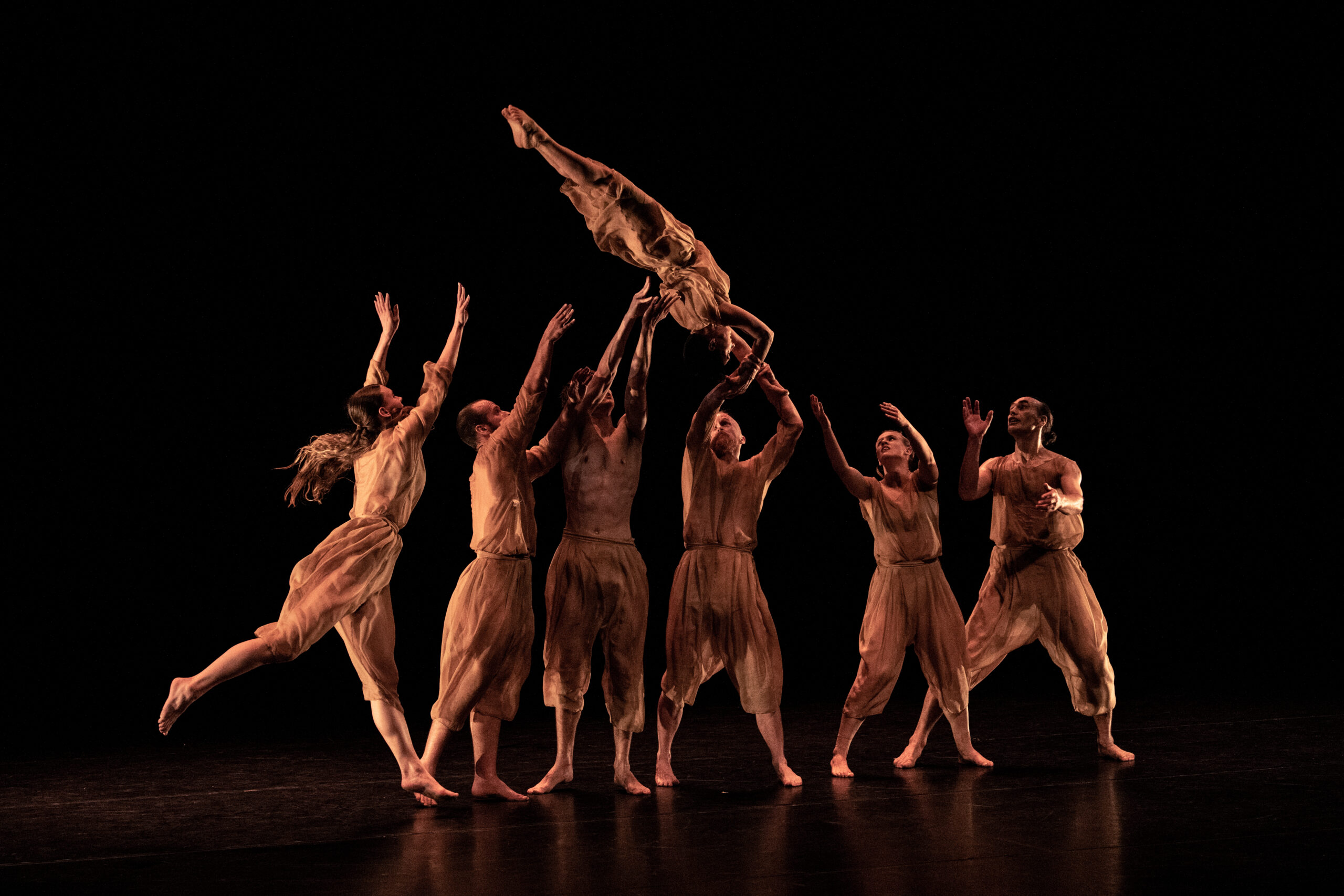
Photo Credit: Erica Sinclair Photography
Related Acts:
About the interviewer Tim Gruar

Tim Gruar – writer, music journalist and photographer Champion of music Aotearoa! New bands, great bands, everyone of them! I write, review and interview and love meeting new musicians and re-uniting with older friends. I’ve been at this for over 30 years. So, hopefully I’ve picked up a thing or two along the way. Worked with www.ambientlight.com, 13th Floor.co.nz, NZ Musician, Rip It Up, Groove Guide, Salient, Access Radio, Radio Active, groovefm.co.nz, groovebookreport.blogspot.com, audioculture.co.nz Website: www.freshthinking.net.nz / Insta @CoffeeBar_Kid / Email [email protected]
More by Tim Gruar
Gig Review: Mā @ Tāwhiri Warehouse, Wellington – 28/02/2026
MNZ Interview: Pos Mavaega
Album Review: Did I Hurt Somebody?
MNZ Interview: Lou’ana
MNZ Interview: Julia Deans / Fur Patrol
EP Review: We Built This World With Aroha

MNZ Interview: Six60
MNZ Interview: Moss Te Ururangi Patterson
Album Review: 6IX